


For most hospitality buyers, bulk purchasing starts as a cost-saving exercise. The assumption is straightforward: larger volumes should mean lower prices, and lower prices should improve margins. On the surface, that logic holds. In practice, it is incomplete.
Bulk buying is not primarily about price. It is about removing uncertainty at scale.
When you are ordering large volumes of product, every small inconsistency is magnified. A slight variation in portion size becomes a measurable margin loss. A delay in delivery becomes a service disruption. A minor quality issue becomes a customer complaint across multiple tables or locations.
This is why experienced operators don’t ask, “Who is the cheapest supplier?” They ask, “Who is the most reliable supplier under pressure?”
Because reliability is what protects margin, brand consistency, and operational flow.
The Real Risk in Choosing the Wrong Supplier
On paper, most bulk frozen food suppliers look interchangeable. They offer similar product categories, comparable pricing structures, and standard delivery terms. The differences are rarely obvious at the beginning of the relationship.
The problems emerge over time.
One batch cooks slightly differently from the last. Another delivery arrives late. Portion sizes begin to vary. What initially feels like a minor inconvenience gradually becomes a pattern that affects daily operations.
For single-site venues, this creates inefficiency and frustration. Staff spend more time adjusting cooking processes, checking quality, and managing stock inconsistencies. Service slows down, and the kitchen becomes reactive instead of controlled.
For multi-site operators, the impact is significantly greater. Inconsistency at the supplier level translates directly into inconsistency at the customer level. Different locations begin delivering slightly different experiences, which weakens brand reliability.
These issues are rarely dramatic enough to trigger immediate change, but they accumulate. Over time, they erode margin, increase labour pressure, and create avoidable operational friction.
This is the hidden cost of choosing the wrong supplier.
Quick Wins: Lower Costs, Faster Service, Better Control
 The right restaurant frozen food supplier does more than deliver product. They improve the way your kitchen operates from the moment you switch.
One of the most immediate benefits is speed. Ready-to-cook products eliminate prep time, allowing kitchens to move from order to service more efficiently. This is particularly valuable during peak periods when every second counts.
Labour efficiency also improves. When products are designed for consistency and ease of use, there is less reliance on skilled prep work. This reduces pressure on staffing and makes it easier to maintain performance even with fluctuating team experience levels.
Portion control becomes more predictable. Uniform products ensure that each serve delivers the same cost and the same output. This removes variability from pricing calculations and helps maintain stable margins.
Waste is significantly reduced as well. Frozen products with extended shelf life allow for better inventory management, reducing the risk of spoilage and over-ordering. This is especially important in environments where demand can fluctuate.
Finally, menu flexibility increases. Operators can introduce new items without adding complexity to kitchen processes. This allows for innovation without operational risk.
These are not incremental improvements. They are structural advantages that compound over time.
What to Look for in a Bulk Frozen Food Supplier
Choosing the right supplier requires a shift in perspective. Instead of focusing solely on pricing, buyers need to evaluate capability and long-term fit.
Manufacturing scale is a critical factor. A supplier must be able to produce high volumes consistently without compromising quality. This requires not only capacity but also process control.
Product specialisation is equally important. Suppliers that focus on specific categories tend to deliver better performance within those areas. Generalists may offer a broader range, but specialists provide deeper expertise.
Distribution capability should not be overlooked. Reliable delivery across locations is essential for maintaining consistency. A supplier that struggles with logistics will create ongoing operational challenges.
Track record provides valuable insight. Suppliers already working with major retailers, QSR chains, or national distributors have proven their ability to meet high standards. This reduces risk for new buyers.
Operational systems, including modern facilities and quality control processes, are what underpin consistency. Without these systems, even the best intentions cannot deliver reliable outcomes.
These criteria separate suppliers that can support growth from those that limit it.
Why Keith’s Outperforms Typical Wholesale Suppliers
Keith’s Quality Foods operates from a fundamentally different position than many wholesale frozen foods providers. Rather than acting as a distributor of broad categories, the company is a specialist manufacturer focused on crumbed and battered value-added products.
This focus allows for a level of refinement that generalist suppliers cannot match. Products are not simply produced; they are engineered for consistent cooking performance in real-world foodservice environments.
With nearly 50 years of manufacturing experience, processes have been developed, tested, and optimised over decades . This history translates into a deep understanding of what works at scale and what does not.
The investment in a state-of-the-art 2024 facility further strengthens this position. Automation, advanced quality control systems, and efficient production lines ensure that every batch meets the same standard .
Keith’s already supplies major retailers, national foodservice distributors, and QSR chains. This level of exposure requires strict adherence to quality, consistency, and compliance standards. Those same standards benefit every customer, regardless of size.
The result is a supplier that delivers not just product, but certainty.
Products That Drive Volume and Margin
Bulk purchasing only delivers value when the products themselves perform. High-volume buying of low-performing items simply ties up capital and storage space without generating return.
Keith’s product range is built around categories that consistently move in foodservice environments.
Dagwood Dogs are a strong example of a high-turnover item. Their recognisable format and broad appeal make them suitable for a wide range of venues, from takeaway outlets to events.
Churros represent a high-margin opportunity within the dessert category. Their versatility allows them to be positioned as both a snack and a dessert, increasing their usage across menus.
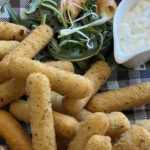
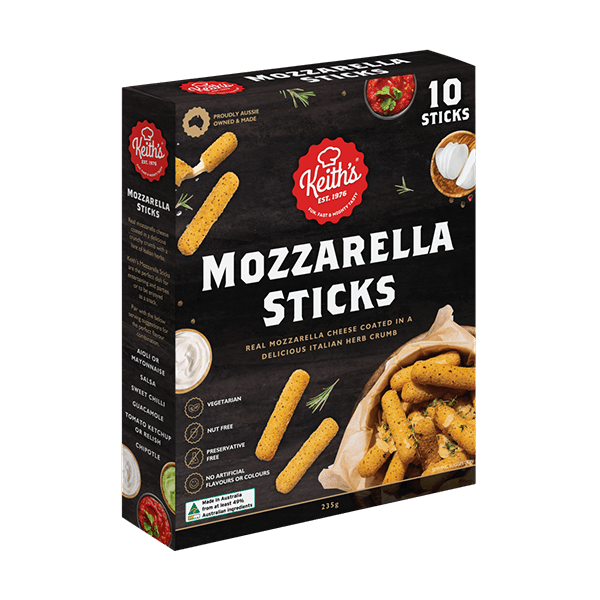
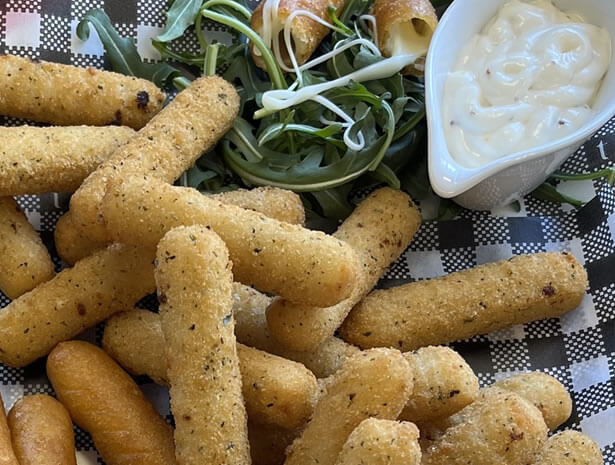
Mozzarella sticks continue to perform as a reliable shareable item. Their combination of texture and flavour makes them an easy addition to menus, with strong upsell potential.
Seafood sticks and croquettes provide cost-effective options for platters and combo meals. They allow operators to build value into menu offerings without significantly increasing cost.
These products are not theoretical best-sellers. They are proven performers across national distribution channels, making them low-risk additions to any operation.
Scale, Supply, and Operational Reliability
Bulk supply is not simply about having enough stock. It is about maintaining consistency across every order, regardless of volume.
Keith’s manufacturing model is designed to deliver this consistency. High-volume production is supported by automated systems that reduce variability. Quality control processes ensure that each batch meets defined standards before it reaches the customer.
Cold chain logistics play a crucial role as well. Efficient handling and distribution preserve product integrity from the factory to the kitchen. This ensures that what arrives performs exactly as expected.
For hospitality buyers managing multiple sites, this level of reliability is essential. It allows for standardised processes across locations, which is key to maintaining brand consistency.
Without reliable supply, even the best menu and operational strategy will struggle to deliver consistent results.
Compliance: The Hidden Dealbreaker
Compliance is often treated as a background requirement, but in reality it is one of the most critical factors in supplier selection.
Keith’s operates under a comprehensive framework that includes HACCP, SQF, Halal, SEDEX, and Yum! approvals. These certifications are not simply credentials. They represent systems and processes that ensure food safety, traceability, and operational discipline.
This matters because food safety failures carry a significant commercial and public health cost. Food Standards Australia New Zealand reports that foodborne illness costs the Australian economy around $3 billion each year, with about a quarter of annual gastroenteritis cases linked to contaminated food. For hospitality operators, this reinforces why supplier compliance, safe handling systems, and traceable production processes should be assessed before price alone.
For hospitality buyers, this translates into reduced risk. Suppliers with strong compliance frameworks are less likely to encounter issues that could disrupt supply or damage reputation.
Compliance also simplifies onboarding for larger organisations. Franchise groups and QSR chains often require specific certifications, and working with an approved supplier removes a significant barrier.
In many cases, compliance is what determines whether a supplier can support long-term growth.
Contract Manufacturing as a Growth Lever
For brands looking to expand, production capacity is often the limiting factor. Building manufacturing infrastructure requires significant investment, time, and expertise.
Keith’s offers an alternative through contract manufacturing.
This capability allows businesses to develop and scale products without building their own facilities. From product development and trials to full-scale production and distribution, the entire process can be managed within an existing, proven system .
This approach accelerates time to market and reduces financial risk. It also allows brands to focus on marketing, sales, and customer experience rather than manufacturing complexity.
For growing businesses, this is not just a convenience. It is a strategic advantage.
FAQs
What are the benefits of buying from bulk frozen food suppliers?
Bulk purchasing reduces cost per unit, improves consistency, and ensures reliable supply for high-volume operations.
How long do frozen food products last?
Many products offer up to 24 months shelf life, helping reduce waste and improve inventory control .
Are frozen products suitable for restaurants and QSRs?
Yes, they are designed for speed, consistency, and ease of preparation, making them ideal for high-demand environments.
Can suppliers handle multi-location businesses?
Leading suppliers like Keith’s are built to support national distribution and multi-site operations.
Do bulk suppliers offer private label or custom products?
Yes, contract manufacturing and private label solutions are available for businesses looking to scale.
The Smarter Buying Decision
Bulk buying is not about chasing the lowest price. It is about securing the most reliable outcome for your business.
Keiths Foods has spent decades building the systems, infrastructure, and expertise required to deliver consistent, scalable supply across Australia. From manufacturing to distribution, every part of the operation is designed to remove risk and improve performance .
If you are managing multiple sites, planning for growth, or simply tired of dealing with supplier inconsistency, the decision becomes clear.
You need a partner that can deliver the same result every time, at any scale.
Make the switch to a supplier built for certainty, not compromise.
Enquire now and secure a bulk frozen food partner that grows with your business.